“This season, fashion didn’t whisper. It argued. Dior went quiet. Versace went loud. And the rest of us? We’re just decoding the noise.”
Just when fashion week was starting to feel predictable, heritage houses doing heritage things, beige tones and quiet sighs of luxury, two creative directors decided to stir the pot. Enter Jonathan Anderson for Dior, and Dario Vitale for Versace. Both are making their debuts. Both are redefining what their houses stand for. And both are proving that fashion still knows how to serve drama.
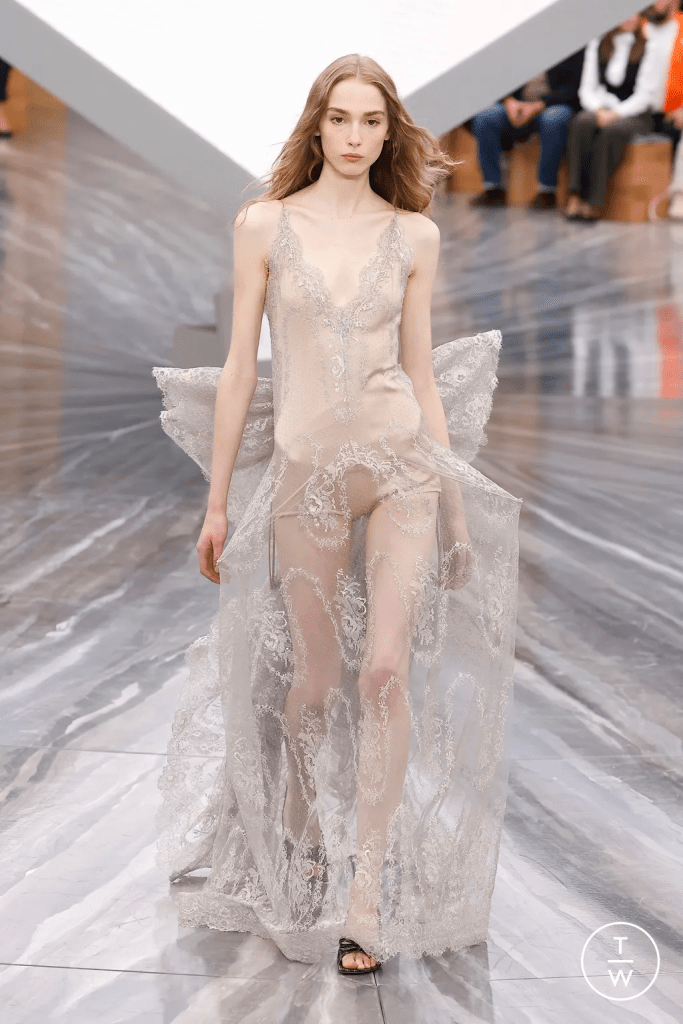
If Dior was a whisper in silk, Versace was a scream in sequins. One spoke to the intellect; the other to the impulse. One asked us to listen. The other demanded we look. And the crowd? Oh, darling, they were eating it up, one pearl at a time.Jonathan Anderson’s Dior debut was an elegant rebellion against noise. No gimmicks, no theatrics, just craftsmanship so precise it almost felt meditative. The Bar jacket reimagined, the tailoring humanised, the palette calm, it was couture therapy for a generation exhausted by trends. It wasn’t shouting “luxury”; it was whispering, “I’ve always been here.” Critics swooned. Words like “intellectual,” “poetic,” and “refined” fluttered through post-show reviews like well-dressed butterflies. But there was also a quiet question in the air: Can quiet luxury still make noise in an algorithmic world? Anderson seemed unbothered. Dior, under his eye, became a sanctuary, not a spectacle. It was fashion with a pulse, not a performance.
Meanwhile, in Milan, Versace decided subtlety was cancelled. Dario Vitale came out swinging, metallic minis, latex bombers, crystal bustiers, the whole fever dream. It was loud, it was chaotic, and it was gloriously unapologetic. If Dior was poetry, Versace was pop. The show was like watching the early 2000s crash a rave in the metaverse. Critics were split; some called it “a glorious resurrection of glamour,” others called it “a Y2K migraine.” But either way, everyone was talking. And maybe that’s the point. In an era where fashion houses beg for engagement, Vitale gave Versace what it needed most: attention. Whether you loved it or hated it, you felt it.

The beauty of these two debuts lies in their opposition. Dior gave us introspection; Versace gave us instinct. Dior was about stillness; Versace was about motion. Both houses, in their own way, reflected the split personality of modern luxury, one craving calm, the other chaos.
Because let’s be honest: fashion right now is having an identity crisis. One half wants to meditate in monochrome; the other wants to party in neon. Consumers are caught in the middle, scrolling between both, trying to decide which version of themselves to be. Dior sells emotional intelligence. Versace sells emotional release. And we, the audience, want both. So what does this contrast say about the state of fashion? That we’re living in a time when luxury means whatever mood you’re in. Quiet craftsmanship or loud spectacle, authenticity or attention, the runway has space for both. And honestly? That’s the best drama fashion could give us. At the end of the day, Dior didn’t whisper because it was shy; it whispered because it could. Versace didn’t scream because it was desperate; it screamed because silence is overrated. And together, they reminded us that luxury doesn’t have one language, it has two dialects: one spoken in silk, the other in sequins.
 Runway Rumour
Leave a comment