• There was a time when a Vogue cover could define an era. A single image could alter beauty standards, crown a cultural icon, or spark a global aesthetic conversation. It was never merely a photograph; it was a mood, a manifesto. Yet, today, Vogue USA feels unmoored, trading its storied vision for something algorithmic, confused, and curiously forgettable.

    vogue.com

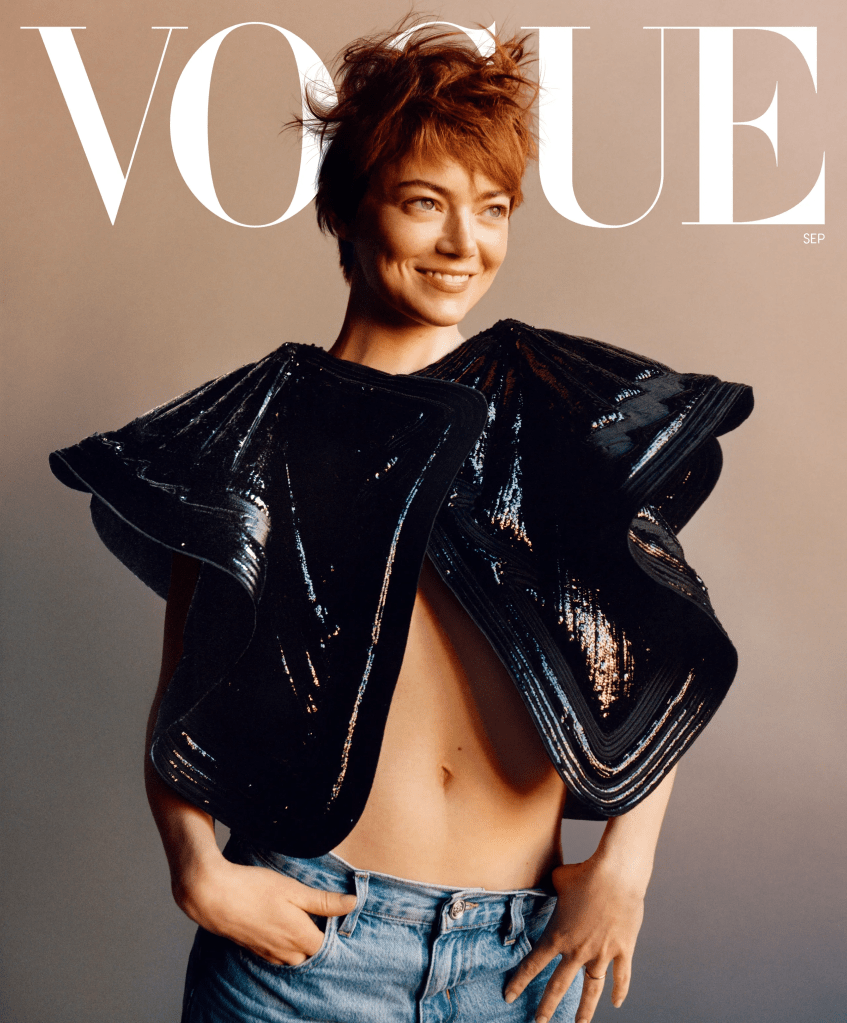
    Take the recent Emma Stone cover. On paper, it should have been a triumph: an Oscar-winning muse, photographed by Jamie Hawkesworth, styled by Grace Coddington. Yet what should have felt cinematic instead felt sterile. Stone, cloaked in muted Louis Vuitton, looked less like an icon and more like a placeholder for nostalgia. The lighting, stripped of drama, betrayed no emotion. There’s minimalism, and then there’s absence, and this was the latter. Vogue has always excelled at restraint, but it once had purpose. Now, it feels more like self-erasure.
    vogue.com

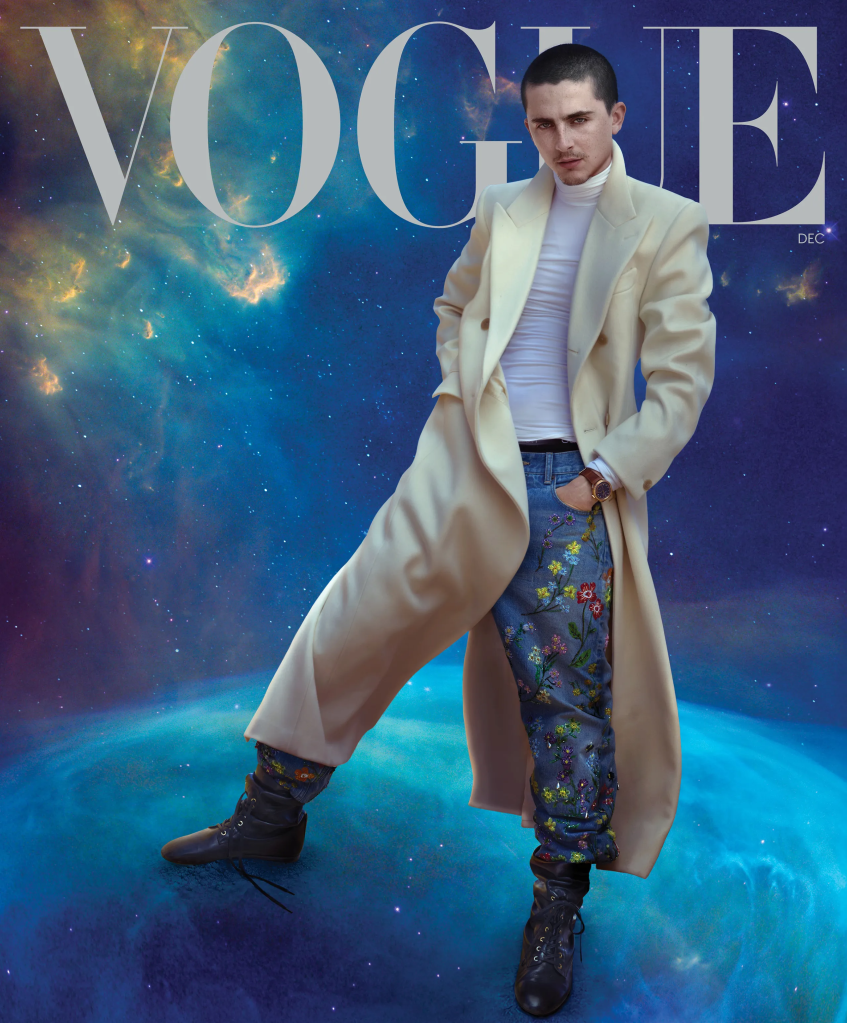
    Then came Timothée Chalamet’s December issue, an attempt at cosmic fantasy gone aesthetically adrift. The concept was grand: Chalamet suspended above a planetary backdrop, photographed by Annie Leibovitz. But instead of surrealism, it delivered confusion. The visual metaphor was never clear, the execution oddly lifeless. Viewers accused Vogue of using AI, and the backlash said it all, this was a magazine once fluent in visual storytelling, now stumbling through the grammar of digital spectacle.

    Chalamet’s allure has always been his fluid masculinity, his ease in subverting fashion codes. Yet even that charisma couldn’t rescue an image that felt visually weightless. The problem isn’t him, it’s Vogue’s waning conviction in what makes an image iconic.
    vogue.com

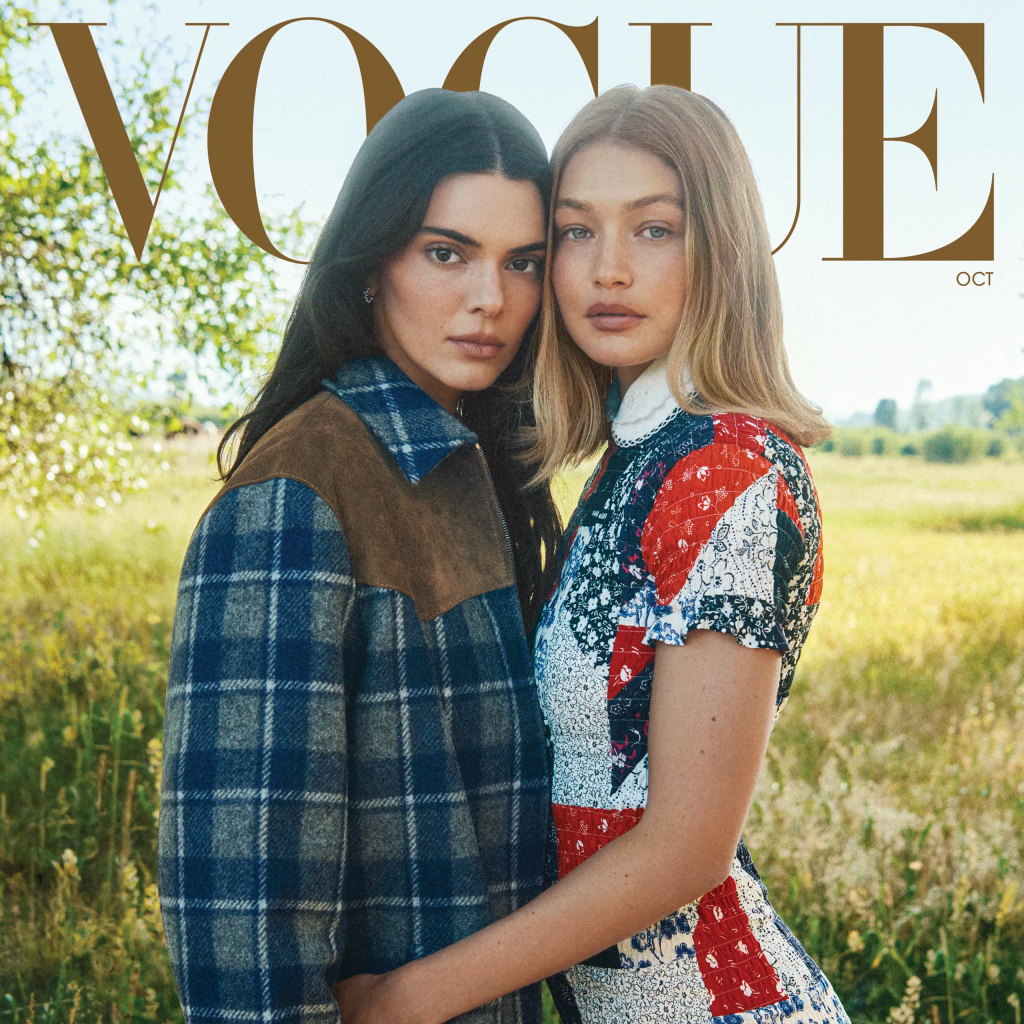
    Much of this visual uncertainty coincides with internal change. As Anna Wintour steps down as Editor-in-Chief and Chloe Malle takes the new title of Head of Editorial Content for U.S. Vogue, the publication faces its most existential moment. Wintour retains powerful global control, but the old, singular authority is fading, and the new digital-focused voice hasn’t yet found its rhythm. The result is a magazine visually caught between nostalgia and neutrality, a publication that once dictated taste, now awkwardly trying to appear relatable.
    vogue.com

    In truth, these covers mark more than an aesthetic misstep; they signify a cultural reprogramming. Fashion imagery today must navigate sensitivity, inclusivity, and digital immediacy, values that often dilute the edge that once defined Vogue’s authority. The magazine now stands at a crossroads: will it rediscover the audacity of vision, or settle into algorithmic approval? Future covers may lean toward collaborative authenticity, featuring voices outside traditional celebrity circles, but whether that will reignite its visual fire remains uncertain.

    Because when a magazine built on fantasy forgets how to dream, the world stops looking.

  • There was a time when fashion’s obsession with authenticity felt almost noble. The industry had reached its breaking point, too much gloss, too much curation, too many filters over filters. Consumers were burnt out from the spectacle, hungry for something that felt real again. Cue the era of raw denim, minimal campaigns, and models caught “mid-laugh” on film cameras. Suddenly, everyone wanted to look unfiltered, unposed, unbothered. But the thing about authenticity is that the moment you try to manufacture it, you’ve already lost it. The irony, of course, is delicious. Authenticity became a marketing strategy faster than you could say “quiet luxury.” Brands started selling imperfections as if they were a limited edition. Influencers posted “I just woke up like this” shots sponsored by SK-II. A generation that prided itself on seeing through the façade ended up buying a new one, just with better lighting. Let’s be honest, the authentic aesthetic became its own uniform.

    The plain white tank. The messy bun that took three products to perfect. The artfully wrinkled linen shirt. Somewhere between the oversharing confessions and the soft-focus vulnerability, “realness” started to look suspiciously like a performance. And like all good performances, it was highly curated, strategically spontaneous, and algorithmically approved. But perhaps that’s the paradox. The more we chase authenticity, the more it slips away. In an economy built on self-presentation, even rebellion gets branded. The influencer who “quits influencing” still posts the announcement on Instagram. The designer who rejects trends ends up on a Vogue list for doing exactly that. And the moment someone says, “I don’t care what people think,” they’re already thinking about how that sounds. 

    The truth is, authenticity today isn’t about being real; it’s about looking real. It’s about performing sincerity so convincingly that the audience forgets there’s a script. Brands have caught on. They know the modern consumer doesn’t want perfection anymore; they want proximity. They want to feel like they’re in on the secret. So campaigns are no longer glossy; they’re “behind the scenes.” Collections aren’t “exclusive”, they’re “community-driven.” And the word “authentic” now appears so often in press releases, it’s starting to lose all meaning. Maybe the problem isn’t the performance itself, maybe it’s our denial of it. Fashion has always been about transformation, about constructing identity through fabric and fantasy. To pretend otherwise is to strip it of its very power. The more interesting question, then, isn’t “How do we stay authentic?” but rather, “What does authenticity even mean when everyone’s selling it?” Because perhaps, deep down, we don’t actually want raw truth. We want a version of it that’s palatable, aspirational, and a little bit beautiful. Maybe we don’t crave authenticity so much as the illusion of intimacy, the idea that someone, somewhere, is letting us see behind the curtain, even if they’re standing under studio lights.

    And that’s okay. Maybe authenticity was never about purity, but about intention, the quiet wink that says, “Yes, I know this is all a show, but isn’t it a good one?”

  • “Fashion should be a form of escapism, and not a form of imprisonment.”


    Every season, fashion promises reinvention. And every season, it delivers another circus. Spring/Summer 2026 was no exception, a sensory overload of skin, shock, and spectacle. From Paris to Milan, the runways became theatres of provocation where nudity, gimmicks, and performance art blurred into a single chaotic feed scroll.

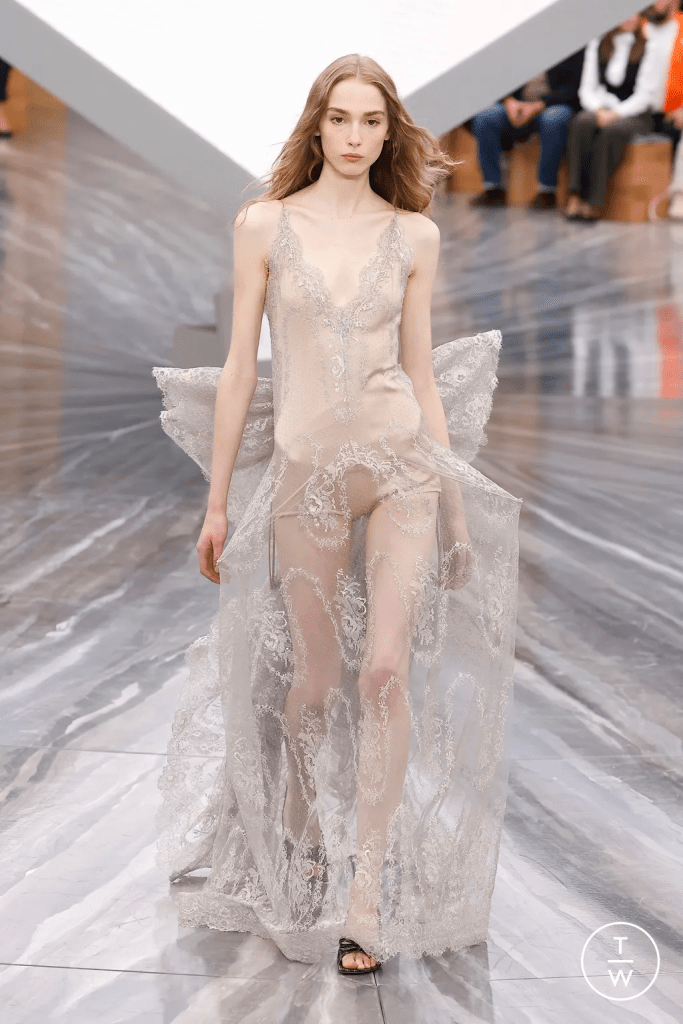
    JPG Spring Summer 2026 : Tagwalk

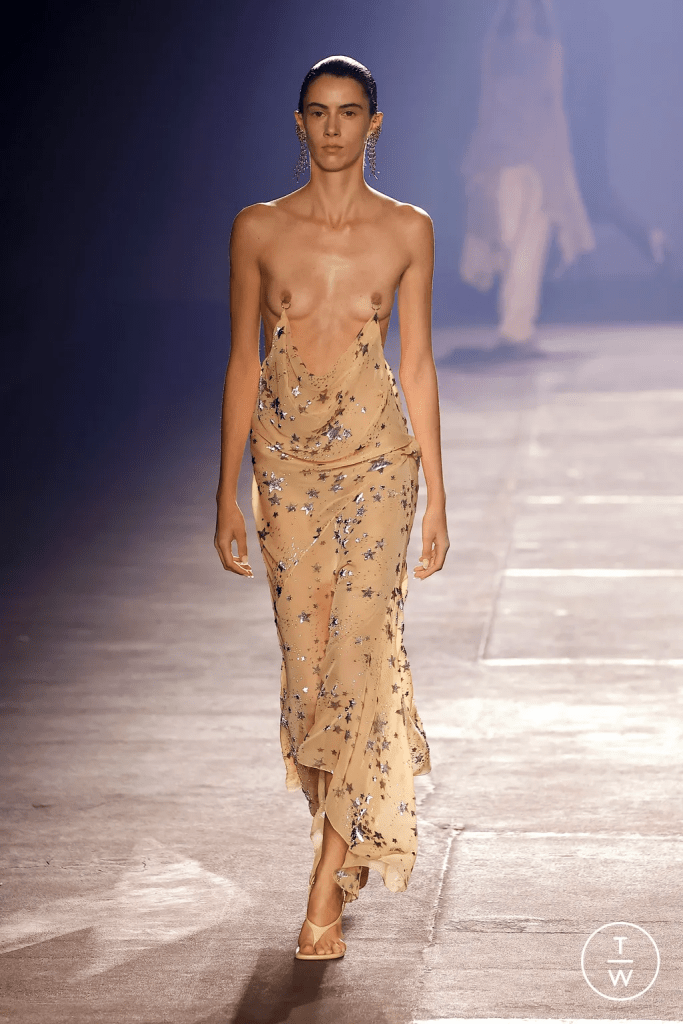
    Let’s start with the obvious: the cult of exposure. Designers like Jean Paul Gaultier and Mugler didn’t just flirt with sensuality this season; they stripped it bare. At Gaultier, the collection played on illusion, with trompe-l’œil naked prints that turned the human body into a living canvas, cheeky, clever, and borderline voyeuristic. Meanwhile, Mugler pushed the envelope further: one look featured a dress suspended from the model’s nipples, an image so deliberately scandalous it was practically engineered for the algorithm. 

    Mugler Spring Summer 2026 : Tagwalk

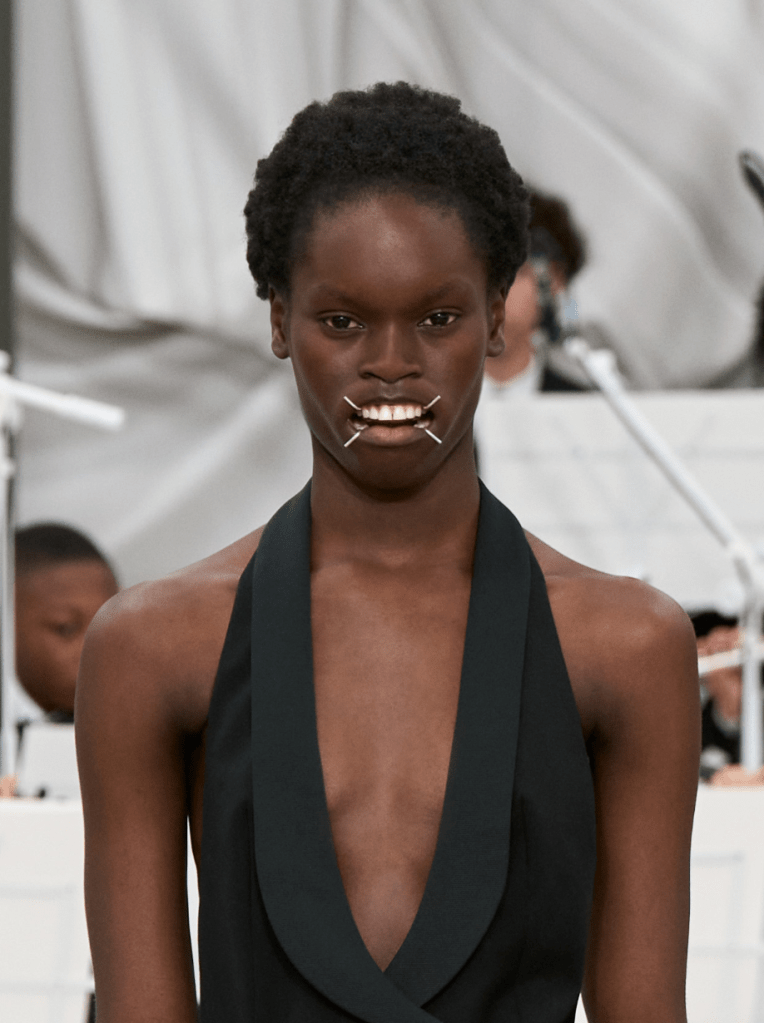
    It wasn’t about seduction anymore; it was about visibility. Every provocation felt calibrated for virality, every “shocking” reveal designed to trend before the audience could even clap. It’s not fashion for the human eye anymore; it’s fashion for the feed. But what’s more interesting, and arguably more exhausting, is the growing obsession with shock theatre on the runway. Take Maison Margiela, where models sported surreal, lip-shaped mouthpieces referencing the brand’s historic logo. It was meant as a poetic homage, and perhaps it was. But in a season already saturated with theatrics, it risked feeling like another attempt to out-weird the rest. What was once subversive is now strategy, and everyone’s playing the same game. We’ve reached a point where gimmickry is currency. 

    Maison Margiela Spring Summer 2026 – Maison Margiela website

    A dress catching fire, a model crying on cue, prosthetics that distort the body, they’re all designed to go viral before the audience even leaves their seats. The clothes themselves, ironically, have become secondary. Designers no longer compete on craftsmanship or silhouette; they compete on shareability. And yet, here’s the paradox: beneath all the shock and spectacle, there’s a lingering sense of creative fatigue. When everyone is trying to be the loudest, subtlety becomes the true rebellion. The most radical moment this season wasn’t another display of flesh; it was the quiet minimalism of a few smaller houses that dared to focus on cut, construction, and intimacy rather than chaos. Fashion, at its best, has always been a reflection of cultural tension, desire, and restraint, as well as fantasy and control. However, the current obsession with spectacle feels hollow, a desperate attempt to evoke a sense of emotion, anything, in an age of endless scrolling. The irony is, the more fashion tries to shock, the less shocking it becomes. Perhaps next season, the real statement won’t be a naked body or a screaming gimmick, but a whisper. A well-cut jacket. A silhouette that speaks softly but lingers longer than a viral clip ever could. Until then, we’ll keep watching, equal parts fascinated and fatigued, as the industry confuses spectacle for substance and the runway for a stage.

    Runway Rumours, signing off. Because sometimes, the most provocative thing you can wear is mystery.

  • “This season, fashion didn’t whisper. It argued. Dior went quiet. Versace went loud. And the rest of us? We’re just decoding the noise.”

    Just when fashion week was starting to feel predictable, heritage houses doing heritage things, beige tones and quiet sighs of luxury, two creative directors decided to stir the pot. Enter Jonathan Anderson for Dior, and Dario Vitale for Versace. Both are making their debuts. Both are redefining what their houses stand for. And both are proving that fashion still knows how to serve drama.

    If Dior was a whisper in silk, Versace was a scream in sequins. One spoke to the intellect; the other to the impulse. One asked us to listen. The other demanded we look. And the crowd? Oh, darling, they were eating it up,  one pearl at a time.Jonathan Anderson’s Dior debut was an elegant rebellion against noise. No gimmicks, no theatrics, just craftsmanship so precise it almost felt meditative. The Bar jacket reimagined, the tailoring humanised, the palette calm, it was couture therapy for a generation exhausted by trends. It wasn’t shouting “luxury”; it was whispering, “I’ve always been here.” Critics swooned. Words like “intellectual,” “poetic,” and “refined” fluttered through post-show reviews like well-dressed butterflies. But there was also a quiet question in the air: Can quiet luxury still make noise in an algorithmic world? Anderson seemed unbothered. Dior, under his eye, became a sanctuary, not a spectacle. It was fashion with a pulse, not a performance.

    Dior, Spring/Summer 2026 — Look 6, Source: Tagwalk


    Meanwhile, in Milan, Versace decided subtlety was cancelled. Dario Vitale came out swinging, metallic minis, latex bombers, crystal bustiers, the whole fever dream. It was loud, it was chaotic, and it was gloriously unapologetic. If Dior was poetry, Versace was pop. The show was like watching the early 2000s crash a rave in the metaverse. Critics were split; some called it “a glorious resurrection of glamour,” others called it “a Y2K migraine.” But either way, everyone was talking. And maybe that’s the point. In an era where fashion houses beg for engagement, Vitale gave Versace what it needed most: attention. Whether you loved it or hated it, you felt it.

    Versace, Spring/Summer 2026 — Look 48, Source: Tagwalk

    The beauty of these two debuts lies in their opposition. Dior gave us introspection; Versace gave us instinct. Dior was about stillness; Versace was about motion. Both houses, in their own way, reflected the split personality of modern luxury, one craving calm, the other chaos.

    Because let’s be honest: fashion right now is having an identity crisis. One half wants to meditate in monochrome; the other wants to party in neon. Consumers are caught in the middle, scrolling between both, trying to decide which version of themselves to be. Dior sells emotional intelligence. Versace sells emotional release. And we, the audience, want both. So what does this contrast say about the state of fashion? That we’re living in a time when luxury means whatever mood you’re in. Quiet craftsmanship or loud spectacle, authenticity or attention, the runway has space for both. And honestly? That’s the best drama fashion could give us. At the end of the day, Dior didn’t whisper because it was shy; it whispered because it could. Versace didn’t scream because it was desperate; it screamed because silence is overrated. And together, they reminded us that luxury doesn’t have one language, it has two dialects: one spoken in silk, the other in sequins.

  • “Just when we thought fashion weeks were the playground of heritage houses and slow luxury, fast fashion has slipped back under the spotlight, cue the collective gasp (and eye roll).”

    Fast fashion is back on the runway, babes, and honestly, it’s giving me whiplash. Just when we thought fashion weeks were sacred temples of luxury, craftsmanship, and the occasional diva meltdown, H&M decided to sashay into London Fashion Week 2025 like it was the Met Gala. Lights, cameras, top models, it was less “affordable basics” and more “pretend high-fashion cosplay.” And then, of course, Shein had to make its own cameo with Paris pop-ups and a cheeky flirtation with Vancouver Fashion Week before being yeeted off the guest list after public outrage. Because nothing says “we’re part of the high fashion conversation” like showing up uninvited and hoping nobody notices you brought polyester to a silk party.

    Alex Consani walking the H&M show. Source: Business of Fashion.

    The irony is almost too delicious. Luxury brands can’t shut up about sustainability, darling, it’s their favourite accessory right now, like pearls or a tiny handbag that can’t fit your phone. Yet suddenly, they’re rubbing elbows with the very brands that churn out clothes faster than you can say ‘new drop, babes’. Runway was supposed to be sacred, a chapel to artistry, tailoring, drama. But now? It’s giving LED billboard with a champagne bar. I mean, points for audacity. If you’re going to crash the couture table, at least do it with confidence.

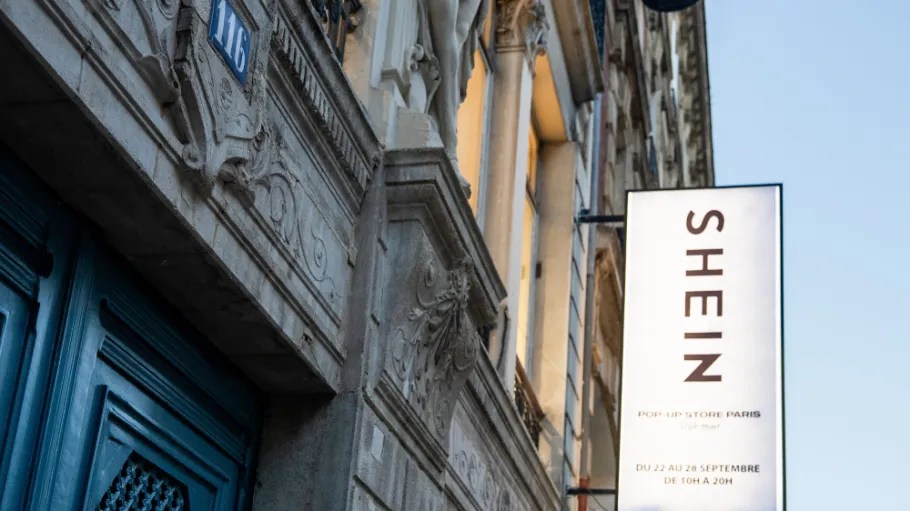
    But wait, the plot thickens. Shein didn’t just send a few influencers to Paris; they opened a full-blown pop-up in the Marais district. Picture this: a 850-square-meter “apartment” styled to mimic Parisian neighborhoods, complete with nine themed rooms from Belleville to Saint-Germain-des-Prés. Visitors could “hunt for styles” through curated events, all while Shein showcased its own products and those from brands on its platform. Talk about crashing the Parisian chic scene with a vengeance.

    Shein’s pop-up in Paris Marais. Source: WWD

    And let’s be honest: it kind of works. Fast fashion is like that toxic ex, problematic, messy, but somehow always in your DMs when you’re bored. It’s fast, global, TikTok-friendly, and it knows how to serve a spectacle. H&M’s show had more cameras flashing than a Kardashian birthday dinner. But here’s the rub: for every applause in the front row, there’s an entire army backstage calling it what it is, greenwashing with a strobe light. We know these brands are ethically shakier than a stiletto on cobblestones, and yet, here we are, watching the show like moths to a very problematic flame.

    And let’s not forget Topshop, returning with a Trafalgar Square show that was less ‘fast fashion’ and more ‘fast-forward nostalgia.’ Joni and Jamie jeans strutted like it was 2012, but with better Wi-Fi. The irony is almost too delicious. Luxury brands can’t shut up about sustainability, darling, it’s their favourite accessory right now, like pearls or a tiny handbag that can’t fit your phone. Yet suddenly, they’re rubbing elbows with the very brands that churn out clothes faster than you can say ‘new drop, babes’. Runway was supposed to be sacred, a chapel to artistry, tailoring, drama. But now? It’s giving LED billboard with a champagne bar. I mean, points for audacity. If you’re going to crash the couture table, at least do it with confidence.

    Topshop and Topman autumn/winter 2025 (Image: Dave Benett). Source: RoolingStone UK

    So is this the democratisation of fashion, finally opening the runway to everyone, not just the silk-robed elite? Or is it the dilution of fashion week into a glorified shopping mall catwalk, where couture and mass-market polyester get equal billing? Depending on who you ask, it’s either the boldest move in fashion or the beginning of the end. Personally, I think it’s both. It’s messy. It’s contradictory. And it’s iconic in the way only fashion can be, because darling, if there’s one thing this industry loves more than sustainability, it’s a good old-fashioned identity crisis served on a silver platter.

    At the end of the day, whether you clap or cancel, you will watch. Because nothing screams runway drama louder than fast fashion pretending it belongs in the same sentence as haute couture. And if fashion week is about spectacle, chaos, and a touch of hypocrisy, then guess what? Fast fashion isn’t just crashing the party; it is THE PARTY! Grab your popcorn, because this is one show that’s too messy to miss.

  • It’s not only the newest drop that has the internet buzzing. The industry is giving us a significant narrative twist with celebrities like Jaden Smith, Pharrell Williams, and even Chloe Malle taking on high-end creative director positions. Is this a brilliant move, or does it indicate that the game is changing, and not in a good way? Let’s open the tea container.

    vman.com

    On one hand, this new wave of appointments feels a bit… messy. The fashion world is a highly specialised craft. Think about the countless hours, the meticulous training, and the sheer dedication of designers who spend their lives dreaming of a chance to lead a major house. When a celeb with no formal design background gets the top spot, it’s easy to feel like their talent and dedication are being sidelined for clout. It’s giving “right place, right time” rather than “earned it.” It suggests that a high follower count and a cool aesthetic are more valuable than the hard-won skills of pattern-making and tailoring.

    But hold up. The fashion industry isn’t just about the threads; it’s about culture. It’s a business built on narrative and image. And who understands the zeitgeist better than the people who define it? This shift isn’t just about selling clothes; it’s about selling a lifestyle, a vibe, and a vision that resonates with a global, digital-first audience. The old criteria for a creative director are evolving. It’s no longer just about who can sketch the best collection, but who can lead the entire brand narrative, from social media campaigns to runway shows and everything in between.

    And let’s not forget the legends who flipped the script. We’re talking about Virgil Abloh, an architect by training, who took over Louis Vuitton menswear and turned it into a cultural phenomenon. Or Hedi Slimane, a photographer and art historian who didn’t attend fashion school but redefined menswear with his razor-sharp silhouette at Dior Homme and Saint Laurent. These visionaries proved that a unique perspective and a deep understanding of culture can be just as, if not more, impactful than a traditional design degree. They didn’t just design clothes; they designed a universe.

    Photo illustration by Lorenzo Vitturi for The New Yorker

    So, what’s the verdict? Are these appointments a betrayal of true talent or a necessary evolution? Is the fashion industry prioritising celebrity over substance, or are we just witnessing a new kind of genius emerge? It’s an open discussion. Drop your thoughts below. Is it a talent issue, a title issue, or just the game playing out in a new way?

  • Hey there! I’m Gitesh, your slightly obsessed fashion nerd with a love for style, trends, and everything in between. Think of this blog as “your backstage pass”THE TEA” to the world of fashion, the glamorous, the weird, and the “wait…really?” moments that nobody talks about.

    Fashion is fabulous, yes, but also full of contradictions. Luxury brands preach sustainability while hoarding mountains of unsold stock. Trends change faster than your Wi-Fi signal drops. And somehow, a £1,000 handbag is both an investment and a conversation starter. Go figure.

    Here at Runway Rumour, I’ll be serving up a mix of hot takes, weird-but-true fashion facts, and a bit of industry gossip (all nicely seasoned with my personal opinions, of course). And spoiler alert: soon, I’ll be dropping some of the findings from my master’s research on overstocking and corporate communication in UK luxury fashion. Basically, think of it as fashion, but with some added salt, or should I say, sugar? Lol! .

    So buckle up, stay curious, and don’t be shy! I’m hoping this becomes a space to laugh, question, and maybe even rage a little over the oddities of this industry we love. Welcome to the runway…rumours included.